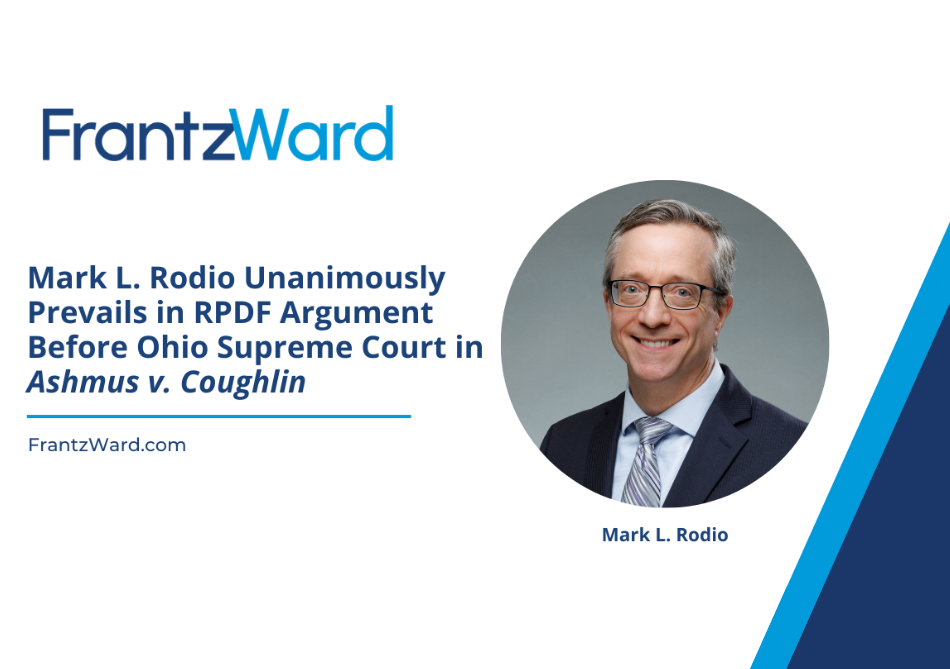
Mark L. Rodio Unanimously Prevails in RPDF Argument Before Ohio Supreme Court in Ashmus v. Coughlin
Mark L. Rodio has unanimously prevailed in a Residential Property Disclosure Form (“RPDF”) argument before the Ohio Supreme Court in Ashmus v. Coughlin in a real estate dispute.
The seller in the case, Ashmus, represented by Mark, originally sued the potential buyers, the Coughlins, of a Bay Village property for breach of contract after the buyers refused to close on the sale under their purchase agreement.
The Coughlins alleged the location and existence of a sewer easement was a material defect required to be disclosed on the RPDF. Ashmus argued that the publicly recorded easement was a due diligence item that appeared on the title commitment, and the Coughlins failed to timely object to it or to show that it materially inhibited the use or value of the property. The trial court granted summary judgment to Ashmus, but a divided panel of the Eighth District Court of Appeals reversed the granting of Ashmus’ motion for summary judgment.
Learn more about the original case here.
The case was then appealed to the Ohio Supreme Court (which accepts jurisdiction in less than 10% of such discretionary appeals), where Mark obtained a unanimous decision, ruling in Ashmus’ favor. The Court held that a sewer located within a publicly recorded sewer easement is not a material defect that is required to be listed on the RPDF, reversing the Eighth District Court of Appeals ruling and reinstating the trial court’s grant of summary judgment. Had the Eighth District’s ruling been upheld, both sellers and their real estate agents would have to disclose all recorded easements on the RPDF, effectively turning them into title examiners.
With nearly 30 years of experience, Mark advises clients on commercial, construction, and real estate matters, including litigation and development. He also represents real estate brokers and salespersons in contract review, regulatory compliance, and litigation.